Research Article | | Peer-Reviewed

The Role of Respiratory Multiplex PCR in Acute Respiratory Infections in Children Under 5 Years of Age: Experience of the Mohammed V Military Teaching Hospital in Rabat

Received: 12 May 2026     Accepted: 26 May 2026     Published: 12 June 2026
Views:       Downloads:
Abstract

Acute respiratory infections are a major cause of morbidity and hospitalisation in children. In this context, respiratory multiplex Polymerase chain reaction (PCR) is a rapid molecular tool enabling the simultaneous identification of several pathogens. The objective of this study was to evaluate the diagnostic contribution of multiplex PCR in paediatric respiratory infections, to describe the epidemiological profile of the patients managed, and to analyse the concordance between PCR results and certain commonly used biological markers, notably C-reactive protein (CRP) and white blood cell count. This was a retrospective descriptive study conducted at the Mohammed V Military Teaching Hospital in Rabat. It included 125 children under the age of 5, hospitalised between September 2021 and September 2025. Respiratory samples were analysed using the FilmArray Respiratory Panel, enabling the simultaneous detection of 16 viruses and 4 bacteria. Clinical and laboratory data were extracted from the DX Lab software. Of the 125 samples analysed, 90 were positive, representing a positivity rate of 72%. In total, 122 pathogens were identified. Viral infections were overwhelmingly predominant, dominated by Rhinovirus/Enterovirus, followed by respiratory syncytial virus (RSV) and severe acute respiratory syndrome Coronavirus 2 (SARS-CoV-2). Bacterial detections were rare. Co-infections were present in more than a third of the positive samples, primarily in the form of viral combinations. Biologically, nearly half of patients with a positive PCR result had normal CRP levels, while the majority had a white blood cell count appropriate for their age, with no systematic correlation with PCR positivity. Respiratory multiplex PCR thus appears to be a highly effective diagnostic tool in the management of paediatric respiratory infections. It enables rapid and reliable identification of infectious agents, improves therapeutic management and may help to limit the inappropriate use of antibiotics. These results support its value in the hospital management of respiratory infections in children in Morocco.

Published in American Journal of Pediatrics (Volume 12, Issue 2)
DOI 10.11648/j.ajp.20261202.14
Page(s) 76-86
Creative Commons

This is an Open Access article, distributed under the terms of the Creative Commons Attribution 4.0 International License (http://creativecommons.org/licenses/by/4.0/), which permits unrestricted use, distribution and reproduction in any medium or format, provided the original work is properly cited.

Copyright

Copyright © The Author(s), 2026. Published by Science Publishing Group

Keywords

Respiratory Multiplex PCR, Acute Respiratory Infections, Paediatrics, FilmArray, Molecular Diagnostics, Morocco

1. Introduction
Respiratory infections represent a major public health challenge within the paediatric population in Morocco. They remain the leading cause of morbidity and mortality in children under 5 years of age in developing countries .
Approximately 80% of respiratory infections in children are caused by viruses, affecting both the upper respiratory tract (such as rhinitis and laryngotracheitis) and the lower respiratory tract (such as bronchitis, bronchiolitis and pneumonia). The annual rate of community-acquired pneumonia in children under five ranges from 34 to 40 per thousand .
In Morocco, acute respiratory infections (ARIs) account for approximately 25 to 30% of hospital admissions among children under 5 years of age, with a marked predominance of acute bronchiolitis, which can represent up to 67% of respiratory admissions during epidemic periods .
Rapid detection and accurate differentiation of multiple infectious agents are key elements for the effective diagnosis of seasonal and sporadic epidemics, as well as infections caused by emerging pathogens .
With recent advances in molecular biology, particularly the introduction of genomic amplification techniques such as polymerase chain reaction (PCR), the identification of pathogens responsible for respiratory infections has improved significantly. PCR has established itself as a reliable and sensitive method for microbiological diagnosis, particularly for the detection of pathogens that are difficult to isolate using conventional culture methods .
This study, conducted within the virology laboratory of the Mohammed V Military Teaching Hospital in Rabat (HMIMV), aimed to:
1) Evaluate the contribution of multiplex PCR in the aetiological diagnosis of respiratory infections in the paediatrics department of HMIMV.
2) Determine the incidence and epidemiological profile of respiratory infections in the paediatric population.
3) Compare and evaluate the diagnostic concordance of multiplex PCR with conventional biological tests (C-reactive protein (CRP) and white blood cell count).
2. Materials and Methods
2.1. Study Type, Setting and Period
This was a retrospective descriptive study conducted at the virology laboratory of the Mohammed V Military Teaching Hospital in Rabat. The study covered all respiratory multiplex PCR tests performed on children hospitalised in the paediatrics department over a four-year period, from September 2021 to September 2025.
2.2. Inclusion Criteria
The inclusion criteria for this study were as follows:
1) Children hospitalised in the paediatrics department of the Military Hospital.
2) Age under 5 years at the time of hospitalisation.
3) Performance of a PCR test from a respiratory sample, in one of the following contexts:
a) Presence of suggestive respiratory symptoms.
b) Presence of non-specific clinical symptoms warranting an in-depth aetiological investigation, particularly by PCR.
2.3. Exclusion Criteria
Patients meeting any of the following criteria were excluded from the study:
1) Age over 5 years.
2) Hospitalisation in a department other than paediatrics.
3) Exclusively outpatient management, without hospitalisation.
2.4. Data Collection
Data were extracted from the virology laboratory's computer database using the DX Lab software. The variables collected included age, sex, year of sampling, multiplex PCR result, type and name of pathogens identified, and available biological parameters, notably CRP and white blood cell count. Data were analysed using Microsoft Excel.
2.5. Samples and Microbiological Analysis
Respiratory samples were collected by nasopharyngeal and/or oropharyngeal swab, with nasopharyngeal sampling preferred whenever possible. Samples were analysed using the FilmArray Respiratory Panel (BioFire), enabling the simultaneous detection of 16 viruses and 4 respiratory bacteria (Table 1). The system automatically performs sample preparation, nucleic acid extraction, nested multiplex PCR and target detection .
3. Results
3.1. Epidemiological Characteristics
A total of 125 hospitalised children who underwent respiratory multiplex PCR were included. Age ranged from 1 month to 5 years, with a mean of 3 years. The 3–4 year age group was the most represented, with 80 patients (64%) (Table 2).
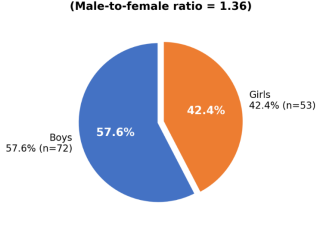
The population comprised 72 boys (57.6%) and 53 girls (42.4%), with a male-to-female ratio of 1.36 (Figure 1).
During the study period, the number of samples collected for respiratory PCR varied from year to year, with a peak in 2022/2023 when 77 samples were collected, representing 61.60% of the samples studied. The other years showed lower proportions, with a marked decrease in 2023/2024, with 9 samples representing 7.20% (Table 3).
3.2. Biological Profile of Sampled Patients
3.2.1. C-reactive Protein (CRP)
Analysis of CRP in the 125 children showed that nearly half had normal CRP (47.2%). Slight and moderate elevations were observed in 19.2% and 23.2% of cases respectively, while a very high CRP (> 100 mg/L) was found in 10.4% of patients (Table 4).
3.2.2. Complete Blood Count (White Blood Cells)
Interpretation of the white blood cell count, performed taking into account the age-specific physiological norms for paediatric patients, showed that the majority of patients had normal white blood cell values (68.0%). Moderate leukocytosis was observed in nearly one-third of cases (29.6%), while marked leukocytosis was rare (2.4%) (Table 5).
3.3. Multiplex PCR Results
Of the 125 samples analysed, 90 were positive (72%), 32 negative (25.6%) and 3 not performed (2.4%). These results indicate a majority of positive tests (Table 6).
Although analysis of the 125 respiratory samples revealed 90 positive samples, a total of 122 pathogens were identified. This discrepancy is explained by the simultaneous detection of several infectious agents within the same sample, reflecting the presence of co-infections. In total, 16 distinct organisms were identified, comprising 13 viral species and 3 bacterial species (Table 7).
Analysis of the 125 respiratory samples revealed 118 viral detections from 90 positive samples. Rhinovirus/Enterovirus was the most frequently identified agent, accounting for 42.4% of detections, followed by RSV (15.3%), SARS-CoV-2 (11.9%) and Adenovirus (10.2%). Other viruses were detected at lower frequencies (Table 8).
Bacterial presence was low (approximately 3% of samples), with only four samples testing positive for a bacterium. Among the identified pathogens, Bordetella pertussis was the most frequently found, with 2 occurrences. Mycoplasma pneumoniae and Chlamydophila pneumoniae were each detected in one sample (Table 9).
3.4. Respiratory Co-infections
Analysis of positive samples showed a predominance of mono-infections, representing 64.4% of cases. Viral co-infections accounted for nearly one-third of cases (31.1%), reflecting the concomitant circulation of several viral agents. Virus-bacterium co-infections were rare, representing only 4.5% of cases, confirming the predominance of viral aetiologies in our series (Table 10).
Table 1. Pathogens detected by the FilmArray Respiratory Panel .

Viruses

Viruses (cont.)

Bacteria

Coronavirus HKU1

Influenza A virus

Mycoplasma pneumoniae

Coronavirus NL63

Influenza B virus

Bordetella parapertussis

Coronavirus 229E

Parainfluenza virus 1

Chlamydophila pneumoniae

Coronavirus OC43

Parainfluenza virus 2

Mycoplasma pneumoniae

Human Metapneumovirus

Parainfluenza virus 3

Human Rhinovirus/Enterovirus

Parainfluenza virus 4

SARS-CoV-2

Respiratory Syncytial Virus (RSV)

MERS-CoV

Adenovirus

Table 2. Distribution of patients by age.Distribution of patients by age.Distribution of patients by age.

Age group

Number

Percentage

< 1 year

6

4.8%

1–2 years

29

23.2%

3–4 years

80

64.0%

5 years

10

8.0%

Total

125

100%

Figure 1. Distribution of patients by sex.
Table 3. Distribution by year of sampling.

Year

Number

Percentage

2021/2022

18

14.4%

2022/2023

77

61.6%

2023/2024

9

7.2%

2024/2025

21

16.8%

Total

125

100%

Table 4. Distribution of CRP values.

CRP

Number

Percentage

Normal (< 10 mg/L)

59

47.2%

Slightly elevated (10–30 mg/L)

24

19.2%

Moderately elevated (30–100 mg/L)

29

23.2%

Very high (> 100 mg/L)

13

10.4%

Total

125

100%

Table 5. Distribution of white blood cell results.

White blood cells

Number

Percentage

Normal values

85

68.0%

Moderate leukocytosis

37

29.6%

Marked leukocytosis

3

2.4%

Total

125

100%

Table 6. Respiratory multiplex PCR results.

PCR result

Number

Percentage

Positive

90

72.0%

Negative

32

25.6%

Not performed

3

2.4%

Total

125

100%

Table 7. Total number of pathogens identified.

Category

Number of detections

Number of species

Viruses

118

13

Bacteria

4

3

Total

122

16

Table 8. Distribution of viruses identified.

Virus

Number

Percentage

Rhinovirus/Enterovirus

50

42.4%

RSV

18

15.3%

SARS-CoV-2

14

11.9%

Adenovirus

12

10.2%

Parainfluenza 3

7

5.9%

Metapneumovirus

5

4.2%

Seasonal coronaviruses

4

3.4%

Influenza B

3

2.5%

Parainfluenza 2

3

2.5%

Influenza A

2

1.7%

Total

118

100%

Table 9. Distribution of bacteria identified.

Bacterium

Number

Bordetella pertussis

2

Mycoplasma pneumoniae

1

Chlamydophila pneumoniae

1

Total

4

Table 10. Distribution of mono-infections and co-infections.

Type of infection

Number

Percentage

Mono-infection

58

64.4%

Virus–virus co-infection

28

31.1%

Virus–bacterium co-infection

4

4.5%

Total

90

3.5. Concordance Between Multiplex PCR Results and Biological Markers
3.5.1. CRP
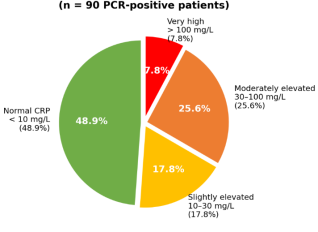
Among the 90 PCR-positive patients, CRP was normal in 44 cases (48.9%), moderately and slightly elevated in 25.6% and 17.8% of cases respectively, while a very high CRP (> 100 mg/L) was observed in only 7 cases (7.8%) (Figure 2).
3.5.2. Complete Blood Count (White Blood Cells)
According to paediatric physiological norms, the white blood cell count was normal in 60 patients (66.7%). Moderate leukocytosis was observed in 27 cases (30.0%), while marked leukocytosis was found in only 3 cases (3.3%).
4. Discussion
4.1. Epidemiological Profile
4.1.1. Age
In our study, the age distribution shows a clear predominance of children aged 3 to 4 years (64.0%), followed by those aged 1 to 2 years (23.2%), while infants under one year and children aged 5 years were less represented, at 4.8% and 8.0% of cases respectively. This profile centred on preschool age contrasts with classical descriptions of paediatric respiratory infections, which are often dominated by infants.
Internationally, viral respiratory infections primarily affect children under five, with a peak incidence generally observed between 2 and 5 years, linked to increased exposure in group settings . In Europe, particularly in the Netherlands and Spain, multiplex PCR-based studies confirm high viral activity in children aged 1 to 5 years, but with a more homogeneous distribution across age subgroups than in our series, which was marked by a concentration of cases between 3 and 4 years . In the United States, respiratory infections requiring hospitalisation mainly affect children under five, with a median age close to two years, reflecting a higher proportion of infants than in our cohort .
In Morocco, national data indicate a high frequency of acute lower respiratory infections in children under five, particularly between 6 and 23 months, which differs from our series, where this age group represented only about one quarter of patients, suggesting a divergence between profiles from population-based surveys and those observed in hospital settings (Table 12) .
These differences could be explained by several factors, including variable hospitalisation criteria, preferential referral of infants with severe forms to specialised facilities, and more frequent use of respiratory multiplex PCR in preschool-age children presenting with recurrent or prolonged infections. Furthermore, limitations in national epidemiological data and the absence of systematic surveillance in Morocco may also contribute to the discrepancies observed between hospital series and population-based data . Thus, although the overall predominance of respiratory infections in children under five is consistent with international trends, the high representation of children aged 3 to 4 years in our series highlights a local specificity, likely related to the hospital profile of the study population and the diagnostic strategies employed.
Table 11. Co-infections by pathogen.

Pathogen

Agent type

Mono-infections

Co-infections

Total detections

Rhinovirus/Enterovirus

Virus

27

23

50

RSV

Virus

9

9

18

SARS-CoV-2 (COVID-19)

Virus

7

7

14

Adenovirus

Virus

3

9

12

Parainfluenza 3

Virus

3

4

7

Metapneumovirus

Virus

2

3

5

Coronavirus OC43

Virus

1

1

2

Coronavirus NL63

Virus

1

1

2

Coronavirus NL63

Virus

0

1

1

Coronavirus 229E

Virus

0

1

1

Parainfluenza 2

Virus

1

2

3

Influenza B

Virus

2

1

3

Influenza A

Virus

2

0

2

Bordetella pertussis

Bacterium

0

2

2

Chlamydophila pneumoniae

Bacterium

0

1

1

Mycoplasma pneumoniae

Bacterium

0

1

1

Total

58

64

122

Figure 2. Concordance between PCR results and CRP.
Table 12. Predominant age group for paediatric respiratory infections according to studies.

Country

Predominant age group

Reference

Our study

3–4 years

United States

< 5 years (median ≈ 2 years)

53

Netherlands

1–5 years

51

Spain

1–5 years

52

Morocco

6–23 months

54

Morocco/North Africa

< 2 years

55

4.1.2. Sex
In our series, a male predominance was observed, with 72 boys (57.6%) versus 53 girls (42.4%), giving a male-to-female ratio of 1.36. This finding is consistent with several international studies reporting a male overrepresentation in paediatric viral respiratory infections. In Malaysia, boys accounted for approximately 58% of hospitalised children, with a sex ratio of 1.4, very close to that of our cohort . Comparable results have been described in Italy, where the male proportion was approximately 56%, corresponding to a sex ratio of about 1.3 . Similarly, Chinese studies using FilmArray multiplex PCR report a male proportion between 55% and 60%, with a sex ratio ranging from 1.2 to 1.5 . In France, virological analyses by multiplex PCR in children also show a male majority, with a sex ratio of 1.2 . In Morocco, hospital studies on severe acute paediatric respiratory infections report a male proportion of 56 to 59%, reinforcing the consistency of our results with national data .
Thus, the male-to-female ratio of 1.36 observed in our series appears fully consistent with international and Moroccan data. This male predominance could be explained by delayed immune maturation in boys, anatomical differences of the airways and early hormonal influences, factors that may increase male vulnerability to respiratory infections during childhood.
However, this trend is not constant. A study conducted in Cambodia reported a female predominance, with a male-to-female ratio of 0.8, indicating a higher proportion of girls among children with respiratory infections detected by multiplex PCR (Table 13) .
Table 13. Sex ratio of paediatric respiratory infections according to studies.

Study/Country

Sex ratio

Reference

Our study

1.36

Malaysia

1.4

56

Italy

1.3

57

China

1.2–1.5

58, 59

France

1.2

60

Morocco

> 1

61

Cambodia

0.8

62

4.1.3. Annual Distribution
In our study, the annual distribution of analysed samples shows considerable variability, marked by a peak in 2022/2023, representing 61.6% of cases, followed by a sharp decline in 2023/2024 (7.2%), then a recovery in 2024/2025 (16.8%). This pattern is consistent with international data describing inter-annual fluctuations in respiratory virological activity and the use of multiplex PCR. In China, the use of respiratory multiplex PCR in a large paediatric centre showed activity highly concentrated over a short period, with 775 children included over a single year (2016–2017), reflecting intense diagnostic demand linked to marked seasonal viral circulation, comparable to the peak observed in our series in 2022/2023 . In Italy, diagnostic activity also appears variable: 539 samples were analysed in Rome between 2016 and 2019, while more than 22,000 tests were performed across the hospital network in Turin between 2016 and 2023, illustrating the alternation between periods of high and low activity , as observed in our study.
Malaysian data, derived from prolonged surveillance from 1982 to 2008, confirm the existence of repeated respiratory epidemic cycles, combining years of high viral circulation with quieter phases . This cyclicity observed on a large scale allows the decline observed in 2023/2024 in our cohort to be interpreted as an expected inter-annual variation, rather than an isolated anomaly .
Thus, although absolute volumes differ across countries and settings, the temporal pattern observed in our study appears consistent with the literature, confirming that diagnostic activity related to respiratory multiplex PCR is closely dependent on seasonal viral circulation, epidemic cycles and local management practices.
4.2. Biological Profile
4.2.1. CRP
In our study, CRP shows partial concordance with respiratory multiplex PCR results. Nearly half of positive patients had normal CRP < 10 mg/L (48.9%; n = 44), while 17.8% had a slight elevation, 25.6% a moderate elevation and 7.8% a very high CRP > 100 mg/L. These data confirm that a PCR-detected respiratory infection, particularly viral, can be accompanied by a weak or absent inflammatory response. This observation is consistent with the findings of Korppi and Kröger, who reported that CRP generally remains below 20–30 mg/L during viral infections, unlike bacterial infections where values are higher . Similarly, Babu et al. highlighted the limited ability of CRP alone to distinguish the aetiology of acute respiratory infections in children . However, the presence of moderately or markedly elevated CRP in our series suggests the possible existence of co-infections, bacterial superinfections or severe clinical forms, as reported particularly in certain RSV bronchiolitis cases .
Thus, our results confirm both the partial concordance between positive PCR and low CRP in viral respiratory infections, and the discordance observed in a proportion of cases where CRP is elevated despite viral detection, emphasising that CRP should be interpreted in conjunction with molecular results and clinical context, rather than as an isolated aetiological marker.
4.2.2. Complete Blood Count (White Blood Cells)
In our study, the majority of patients with a positive respiratory multiplex PCR had a normal white blood cell count according to paediatric norms (66.7%), while moderate leukocytosis was observed in 30.0% of cases and marked leukocytosis in only 3.3%. These results suggest partial concordance between molecular detection of a respiratory agent and the absence of a significant leukocyte response, a situation frequently reported in paediatric viral infections . The literature indeed shows that viral infections alter the immuno-inflammatory profile more than the total white blood cell count, unlike bacterial infections where leukocytosis is often more pronounced . However, the leukocytosis found in nearly one-third of PCR-positive patients in our series illustrates a possible discordance between molecular detection and the peripheral leukocyte response. This elevation may be explained by clinical severity, an exacerbated individual inflammatory response, undocumented bacterial co-circulation, or the impact of certain viral infections, particularly in cases of lower respiratory tract involvement or viral co-infections .
Thus, our results confirm that a positive PCR is not systematically accompanied by a quantitative white blood cell abnormality, consistent with the literature highlighting the limited value of isolated white blood cell count for discriminating the aetiology of paediatric respiratory infections. Combined interpretation of molecular, biological and clinical results therefore remains essential for appropriate management, particularly regarding antibiotic treatment decisions .
4.3. Microbiological Profile
4.3.1. Positivity Rate
Of the 125 respiratory samples included, 90 were positive by multiplex PCR, representing a positivity rate of 72%, versus 25.6% negative results (32 samples) and 2.4% of tests not performed (3 samples) due to logistical constraints such as temporary reagent unavailability or samples deemed unexploitable for technical reasons. This diagnostic yield is close to the high rates reported in hospital and epidemic contexts, notably in Brussels (83.9% with 149 samples), Naples (84.7% with 356 samples), Cairo (93.8%, 177 samples) and China (80.8% with a cohort of 775 hospitalised children) , suggesting high viral circulation and a targeted clinical selection of patients presenting with suggestive respiratory presentations. Conversely, lower rates have been described in Turkey (48.2%) and New York (45.9%), probably due to broader inclusion criteria or samples collected outside seasonal peaks .
Thus, the 72% positivity rate observed in our series occupies an intermediate position between the high values reported in contexts of intense viral circulation and the lower rates described in more heterogeneous recruitment populations. It reflects both a relevant indication of respiratory multiplex PCR in our clinical practice and the epidemiological and organisational specificities of our study context (Table 14).
Table 14. Positivity rate of respiratory multiplex PCR according to studies.

Study

Total sample size

Number positive

Positivity rate (%)

Our study

125

90

72%

Egypt

177

166

93.8%

Italy

356

302

84.7%

Belgium

149

125

83.9%

China

775

626

80.8%

Turkey

536

258

48.2%

United States

438

201

45.9%

4.3.2. Distribution of Identified Pathogens
(i). Overall Pathogen Summary
In our study, 122 pathogens were identified from 90 positive samples, suggesting a notable frequency of co-infections. Viruses accounted for the vast majority of detections, with 118 agents identified (96.7%) belonging to 13 species, versus only 4 bacterial detections (3.3%) corresponding to 3 species. This viral predominance is consistent with Moroccan data reporting 340 viral detections out of 387 positive samples in children hospitalised for severe acute respiratory infection . It is also consistent with American data on paediatric community-acquired pneumonia, where bacteria are identified in only about 15% of children . Finally, a single-centre series of 97 children hospitalised for pneumonia reported a PCR positivity of 76.3%, with viral detection more frequent than bacterial (61 versus 29 samples) . Thus, our results confirm that paediatric respiratory infections investigated by multiplex PCR are predominantly of viral origin, with bacterial agents representing a more limited proportion.
(ii). Virus Distribution
In our cohort, the viral distribution was dominated by Rhinovirus/Enterovirus, belonging to the Picornaviridae family (42.4%), followed by RSV (15.3%), SARS-CoV-2 (11.9%) and Adenovirus (10.2%), reflecting a characteristic paediatric profile. This Picornaviridae predominance is consistent with African data reported in Ghana and the Central African Republic, where their frequency reached approximately 44% and 40% respectively in children with acute respiratory distress . Conversely, in France, RSV historically remains the primary virus in winter respiratory infections, ahead of Rhinoviruses, while Chinese data show significant joint circulation of Rhinovirus/Enterovirus and RSV . Other viruses showed frequencies broadly comparable to international data: Adenovirus at 10.2%, close to French and Chinese rates; Human Metapneumovirus at 4.2%, similar to French data; and Parainfluenza viruses at 8.4%, within internationally reported ranges. In contrast, Influenza A/B (4.2%) and seasonal coronaviruses (3.4%) appear less frequent than in pre-pandemic series, probably related to post-COVID epidemiological changes, while the frequency of SARS-CoV-2 (11.9%) reflects the recent study period (Table 15).
Table 15. Most frequently identified virus according to studies.

Study

Most frequent virus

Frequency (%)

Our study

Rhinovirus/Enterovirus

42.40

France

RSV

39.50

China

Rhinovirus/Enterovirus

25.50

Ghana

Rhinovirus/Enterovirus

36.00

Central African Republic

Rhinovirus/Enterovirus

40.00

(iii). Bacteria
In our paediatric cohort, atypical bacteria were rarely detected, with only four cases: Bordetella pertussis (n = 2), Mycoplasma pneumoniae (n = 1) and Chlamydia pneumoniae (n = 1). This low frequency is consistent with the literature, which reports a generally limited contribution of atypical bacteria compared to viruses in childhood respiratory infections. In China, a large paediatric series using the FilmArray Respiratory Panel found higher frequencies of Mycoplasma pneumoniae and Bordetella pertussis, at 10.6% and 6.3% respectively, highlighting the influence of the epidemiological context and recruitment criteria . Conversely, a Swiss cohort of 4,460 children reported a Mycoplasma pneumoniae prevalence of only 1.6%, close to our results . For Chlamydia pneumoniae, a Mexican study in children hospitalised for pneumonia found a higher frequency of 16.2%, probably related to a targeted selection of documented pneumonias . Thus, despite possible underestimation due to the limited size of our sample, our results confirm the viral predominance and the secondary role of atypical bacteria in paediatric respiratory infections, especially outside confirmed community-acquired pneumonias.
4.3.3. Respiratory Co-infection Profile
In our study, co-infections accounted for 35.6% of positive samples, with a clear predominance of viral co-infections (31.1%) and a low proportion of virus–bacterium associations (4.5%). This frequency is consistent with international paediatric data, where multiple detections are frequently reported, particularly in young children. In Belgium, co-infections represent approximately 30 to 40% of positive samples during influenza epidemics, primarily in the form of viral associations . Similar rates have been described in France, with 25 to 35% of viral co-detections in paediatric emergency settings . In China, a cohort of 775 children analysed by multiplex PCR reported nearly 33% co-infections , while in the United States, approximately one-third of children hospitalised for respiratory infection had multiple viral detections . The low frequency of virus–bacterium co-infections observed in our series is also consistent with the literature, which describes these associations as less frequent in predominantly viral paediatric respiratory infections . Thus, our results are in line with international trends and could be explained by the young age of patients, the seasonality of respiratory viruses and the high sensitivity of the molecular techniques used.
5. Conclusion
This study highlights the value of respiratory multiplex PCR in the aetiological diagnosis of paediatric acute respiratory infections at the Mohammed V Military Teaching Hospital in Rabat. The use of the FilmArray Respiratory Panel enabled the rapid identification of a broad spectrum of respiratory pathogens in children under five years of age, with a clear predominance of viral agents, particularly Rhinovirus/Enterovirus, RSV and SARS-CoV-2. The high positivity rate observed in this cohort, together with the frequency of viral co-infections, confirms that syndromic molecular diagnosis provides clinically relevant information that cannot be obtained from routine biological markers alone. Indeed, CRP and white blood cell count were often normal or only moderately altered among PCR-positive patients, reinforcing the need to interpret inflammatory markers in combination with molecular results and clinical findings.
Beyond its diagnostic performance, multiplex PCR has practical implications for paediatric care. By identifying the infectious agent early, it may support more appropriate patient isolation, improve clinical decision-making, and contribute to antimicrobial stewardship by reducing unnecessary antibiotic prescriptions when a viral aetiology is documented. In the Moroccan hospital context, where paediatric respiratory infections represent a substantial burden, this approach may also help optimise resource use, shorten diagnostic delays and strengthen infection-control strategies during seasonal peaks or epidemic periods. However, because multiplex PCR remains relatively costly, its use should be guided by clear indications, prioritising hospitalised children with severe, atypical, recurrent or epidemiologically significant respiratory presentations.
The results of this work are also important for future research. Larger multicentre and prospective studies are needed to confirm the epidemiological trends observed in this single-centre series, to better describe seasonality, age-specific pathogen distribution and the clinical significance of co-detections. Future investigations should also assess the impact of multiplex PCR on antibiotic consumption, length of hospital stay, isolation practices, health-care costs and patient outcomes. Combining molecular results with clinical severity scores, radiological findings and biomarkers such as CRP, procalcitonin and complete blood count could help develop locally adapted diagnostic algorithms. Finally, establishing continuous molecular surveillance of respiratory pathogens in Moroccan paediatric populations would provide valuable data for anticipating outbreaks, adapting diagnostic strategies and guiding public health decisions. Thus, respiratory multiplex PCR represents not only a major diagnostic tool for current clinical management, but also a foundation for future epidemiological surveillance, research and improvement of paediatric respiratory infection care in Morocco.
Abbreviations

HMIMV

Mohammed V Military Teaching Hospital

PCR

Polymerase Chain Reaction

CRP

C-reactive Protein

ARIs

Acute Respiratory Infections

RSV

Respiratory Syncytial Virus

SARS

Cov 2 Severe Acute Respiratory Syndrome Coronavirus 2

MERS

Cov Middle East Respiratory Syndrome Coronavirus

Author Contributions
Issam Ouhrich: Conceptualization, Investigation, Visualization, Writing – original draft, Writing – review & editing
Rachid Abi: Supervision, original draft - Writing – review & editing Validation
Anouar Akhssas: Conceptualization, Investigation, Validation, Visualization
Imane Laasikri: Conceptualization, Investigation, Validation, Visualization
Fatima Zahra Bennamara: Conceptualization, Investigation, Validation, Visualization
Abir Belahrach: Conceptualization, Investigation, Validation, Visualization
Manal Najib: Conceptualization, Investigation, Visualization
Hind Azzouzi: Conceptualization, Investigation, Visualization
Nada Mchichou: Conceptualization, Investigation, Visualization
Zahira Bouassaba: Conceptualization, Investigation, Visualization
Elarbi Bouaiti: Project Administration, Validation
Mohamed-Rida Tagajdid: Project Administration, Validation
Hicham Elannaz: Project Administration, Validation
Salma Hassine: Project Administration, Validation
Soukaina Ouannass: Project Administration, Validation
Ahmad Reggad: Project Administration, Validation
Mohamed Elqatni: Project Administration, Validation
Abdelilah Laraqui: Project Administration, Validation
Abdelilah Radi: Project Administration, Validation
Hakim Ourrai: Project Administration, Validation
Rachid Abilkassem: Supervision, Project Administration, Validation
Mostafa Elouennass: Supervision, Project Administration, Validation
Khalid Ennibi: Supervision, Project Administration, Validation
Idriss Lahlou Amine: Supervision, Project Administration, Validation
Conflicts of Interest
The authors declare no conflicts of interest.
References
[1] Williams BG, Gouws E, Boschi-Pinto C, Bryce J, Dye C. Estimates of world-wide distribution of child deaths from acute respiratory infections. Lancet Infect Dis. 2002; 2(1): 25-32.
[2] McIntosh K. Community-acquired pneumonia in children. N Engl J Med. 2002; 346(6): 429-437.
[3] Ministry of Health, Morocco. Health in Figures 2022.
[4] Poritz MA, et al. FilmArray, an Automated Nested Multiplex PCR System for Multi-Pathogen Detection. PLoS ONE. 2011; 6(10): e26047.
[5] Chen YS, et al. Comparison of diagnostic tools with multiplex PCR for pediatric lower respiratory tract infection. J Microbiol Immunol Infect. 2013; 46(6): 413-8.
[6] BioFire FilmArray Respiratory Panel. bioMérieux.
[7] Monto AS. Viral respiratory infections in the community. Am J Med. 1995; 99(6B): 24S-27S.
[8] Wishaupt JO, et al. Single- and multiple viral respiratory infections in children. BMC Infect Dis. 2017; 17(1): 62.
[9] Mengelle C, et al. Multiplex real-time PCR for diagnosing acute respiratory viral infections in children. J Clin Virol. 2014; 61(3): 411-7.
[10] Jain S, et al. Community-acquired pneumonia requiring hospitalization among U.S. children. N Engl J Med. 2015; 372(9): 835-45.
[11] Evolution of acute lower respiratory infections in children under 5 in Morocco. EM-Consulte.
[12] Jroundi I, et al. Knowledge gaps on paediatric respiratory infections in Morocco. Arch Public Health. 2015; 73(1): 28.
[13] Khor CS, et al. Epidemiology and seasonality of respiratory viral infections in Kuala Lumpur. BMC Pediatr. 2012; 12: 32.
[14] Ciotti M, et al. Viruses of Respiratory Tract: An Observational Retrospective Study in Rome. Microorganisms. 2020; 8(4): 501.
[15] Li J, et al. Rapid detection of respiratory organisms with FilmArray in China. BMC Infect Dis. 2018; 18(1): 510.
[16] Deng J, et al. Respiratory virus multiplex RT-PCR assay sensitivities in hospitalized children. Virol Sin. 2013; 28(2): 97-102.
[17] Koenig-Zores C, et al. Virological analysis of nasopharyngeal aspirates in children by multiplex PCR. Rev Fr Allergol. 2013; 53(2): 59-64.
[18] Lamrani Hanchi A, et al. Epidemiology of Respiratory Pathogens in Children with SARI. Int J Microbiol. 2021; 2021: 2276261.
[19] Ly N, et al. Multiplex PCR analysis of clusters of unexplained viral respiratory tract infection in Cambodia. Virol J. 2014; 11(1): 224.
[20] Zanotto E, et al. Impact of COVID-19 Pandemic on Respiratory Pathogen Epidemiology. Sci. 2025; 7(1): 23.
[21] Korppi M, Kröger L. C-reactive protein in viral and bacterial respiratory infection in children. Scand J Infect Dis. 1993; 25(2): 207-13.
[22] Babu G, et al. Value of CRP concentration in diagnosis of acute lower respiratory infections. Trop Geogr Med. 1989; 41(4): 309-15.
[23] De Rop L, et al. Point-of-care CRP test results in acute infections in children. BMC Pediatr. 2022; 22(1): 633.
[24] Adar A, et al. CRP Is Associated with Severity in RSV Bronchiolitis. Isr Med Assoc J. 2025; 27(3): 165-71.
[25] MSD Manuals. Lymphopenia – Blood Disorders.
[26] Gad NM, et al. Viral Infections in Egyptian Hospitalized Children with ARI. J Clin Cell Immunol. 2017; 8(5).
[27] Ye X, et al. Bacterial Pneumonia Alters the Respiratory Microbiota. Curr Microbiol. 2025; 82(11): 528.
[28] Cebey-López M, et al. Viral Co-Infections in Pediatric Patients with Lower Tract ARI. PLoS One. 2015; 10(9): e0136526.
[29] del Rosal T, et al. Multiplex PCR and Antibiotic Use in Children with Community-Acquired Pneumonia. Children. 2024; 11(2): 245.
[30] Busson L, et al. Contribution of FilmArray in emergency room management during influenza epidemics. Int J Infect Dis. 2019; 83: 32-9.
[31] The use of multiplex PCR for the diagnosis of viral SARI in children. ResearchGate.
[32] Keske Ş, et al. Rapid diagnosis of viral respiratory tract infections and antimicrobial stewardship. Eur J Clin Microbiol Infect Dis. 2018; 37(4): 779-83.
[33] Katz SE, Williams DJ. Pediatric Community-Acquired Pneumonia in the United States. Infect Dis Clin North Am. 2018; 32(1): 47-63.
[34] Gowin E, et al. Assessment of Multiplex Real-Time PCR Tests in Pneumonia in Hospitalized Children. Biomed Res Int. 2017; 2017: 8037963.
[35] Wilson PT, et al. Respiratory Pathogens in Children in Ghana. J Pediatric Infect Dis Soc. 2019; 8(4): 361-4.
[36] Bobossi Serengbe G, et al. Viral aetiology of acute respiratory infections in children in Bangui. Arch Pediatr. 2015; 22(3): 324-5.
[37] Dierig A, et al. Mycoplasma pneumoniae detection in children in Switzerland. Acta Paediatrica. 2020; 109(2): 375-80.
[38] Merida Vieyra J, et al. Chlamydophila pneumoniae-associated community-acquired pneumonia in paediatric patients in Mexico. Sci Rep. 2023; 13(1): 21477.
[39] Seasonality and prevalence of respiratory pathogens detected by multiplex PCR at a tertiary care medical center. PubMed.
[40] Multiple versus single virus respiratory infections: viral load and clinical disease severity in hospitalized children. PubMed.
[41] Mahony JB. Detection of respiratory viruses by molecular methods. Clin Microbiol Rev. 2008; 21(4): 716-47.
Cite This Article
  • APA Style

    Ouhrich, I., Abi, R., Akhssas, A., Laasikri, I., Bennamara, F. Z., et al. (2026). The Role of Respiratory Multiplex PCR in Acute Respiratory Infections in Children Under 5 Years of Age: Experience of the Mohammed V Military Teaching Hospital in Rabat. American Journal of Pediatrics, 12(2), 76-86. https://doi.org/10.11648/j.ajp.20261202.14

    Copy | Download

    ACS Style

    Ouhrich, I.; Abi, R.; Akhssas, A.; Laasikri, I.; Bennamara, F. Z., et al. The Role of Respiratory Multiplex PCR in Acute Respiratory Infections in Children Under 5 Years of Age: Experience of the Mohammed V Military Teaching Hospital in Rabat. Am. J. Pediatr. 2026, 12(2), 76-86. doi: 10.11648/j.ajp.20261202.14

    Copy | Download

    AMA Style

    Ouhrich I, Abi R, Akhssas A, Laasikri I, Bennamara FZ, et al. The Role of Respiratory Multiplex PCR in Acute Respiratory Infections in Children Under 5 Years of Age: Experience of the Mohammed V Military Teaching Hospital in Rabat. Am J Pediatr. 2026;12(2):76-86. doi: 10.11648/j.ajp.20261202.14

    Copy | Download

  • @article{10.11648/j.ajp.20261202.14,
      author = {Issam Ouhrich and Rachid Abi and Anouar Akhssas and Imane Laasikri and Fatima Zahra Bennamara and Abir Belahrach and Manal Najib and Hind Azzouzi and Nada Mchichou and Zahira Bouassaba and Elarbi Bouaiti and Mohamed-Rida Tagajdid and Hicham Elannaz and Salma Hassine and Soukaina Ouannass and Ahmad Reggad and Mohamed Elqatni and Abdelilah Laraqui and Abdelilah Radi and Hakim Ourrai and Rachid Abilkassem and Mostafa Elouennass and Khalid Ennibi and Idriss Lahlou Amine},
      title = {The Role of Respiratory Multiplex PCR in Acute Respiratory Infections in Children Under 5 Years of Age: Experience of the Mohammed V Military Teaching Hospital in Rabat},
      journal = {American Journal of Pediatrics},
      volume = {12},
      number = {2},
      pages = {76-86},
      doi = {10.11648/j.ajp.20261202.14},
      url = {https://doi.org/10.11648/j.ajp.20261202.14},
      eprint = {https://article.sciencepublishinggroup.com/pdf/10.11648.j.ajp.20261202.14},
      abstract = {Acute respiratory infections are a major cause of morbidity and hospitalisation in children. In this context, respiratory multiplex Polymerase chain reaction (PCR) is a rapid molecular tool enabling the simultaneous identification of several pathogens. The objective of this study was to evaluate the diagnostic contribution of multiplex PCR in paediatric respiratory infections, to describe the epidemiological profile of the patients managed, and to analyse the concordance between PCR results and certain commonly used biological markers, notably C-reactive protein (CRP) and white blood cell count. This was a retrospective descriptive study conducted at the Mohammed V Military Teaching Hospital in Rabat. It included 125 children under the age of 5, hospitalised between September 2021 and September 2025. Respiratory samples were analysed using the FilmArray Respiratory Panel, enabling the simultaneous detection of 16 viruses and 4 bacteria. Clinical and laboratory data were extracted from the DX Lab software. Of the 125 samples analysed, 90 were positive, representing a positivity rate of 72%. In total, 122 pathogens were identified. Viral infections were overwhelmingly predominant, dominated by Rhinovirus/Enterovirus, followed by respiratory syncytial virus (RSV) and severe acute respiratory syndrome Coronavirus 2 (SARS-CoV-2). Bacterial detections were rare. Co-infections were present in more than a third of the positive samples, primarily in the form of viral combinations. Biologically, nearly half of patients with a positive PCR result had normal CRP levels, while the majority had a white blood cell count appropriate for their age, with no systematic correlation with PCR positivity. Respiratory multiplex PCR thus appears to be a highly effective diagnostic tool in the management of paediatric respiratory infections. It enables rapid and reliable identification of infectious agents, improves therapeutic management and may help to limit the inappropriate use of antibiotics. These results support its value in the hospital management of respiratory infections in children in Morocco.},
     year = {2026}
    }
    

    Copy | Download

  • TY  - JOUR
    T1  - The Role of Respiratory Multiplex PCR in Acute Respiratory Infections in Children Under 5 Years of Age: Experience of the Mohammed V Military Teaching Hospital in Rabat
    AU  - Issam Ouhrich
    AU  - Rachid Abi
    AU  - Anouar Akhssas
    AU  - Imane Laasikri
    AU  - Fatima Zahra Bennamara
    AU  - Abir Belahrach
    AU  - Manal Najib
    AU  - Hind Azzouzi
    AU  - Nada Mchichou
    AU  - Zahira Bouassaba
    AU  - Elarbi Bouaiti
    AU  - Mohamed-Rida Tagajdid
    AU  - Hicham Elannaz
    AU  - Salma Hassine
    AU  - Soukaina Ouannass
    AU  - Ahmad Reggad
    AU  - Mohamed Elqatni
    AU  - Abdelilah Laraqui
    AU  - Abdelilah Radi
    AU  - Hakim Ourrai
    AU  - Rachid Abilkassem
    AU  - Mostafa Elouennass
    AU  - Khalid Ennibi
    AU  - Idriss Lahlou Amine
    Y1  - 2026/06/12
    PY  - 2026
    N1  - https://doi.org/10.11648/j.ajp.20261202.14
    DO  - 10.11648/j.ajp.20261202.14
    T2  - American Journal of Pediatrics
    JF  - American Journal of Pediatrics
    JO  - American Journal of Pediatrics
    SP  - 76
    EP  - 86
    PB  - Science Publishing Group
    SN  - 2472-0909
    UR  - https://doi.org/10.11648/j.ajp.20261202.14
    AB  - Acute respiratory infections are a major cause of morbidity and hospitalisation in children. In this context, respiratory multiplex Polymerase chain reaction (PCR) is a rapid molecular tool enabling the simultaneous identification of several pathogens. The objective of this study was to evaluate the diagnostic contribution of multiplex PCR in paediatric respiratory infections, to describe the epidemiological profile of the patients managed, and to analyse the concordance between PCR results and certain commonly used biological markers, notably C-reactive protein (CRP) and white blood cell count. This was a retrospective descriptive study conducted at the Mohammed V Military Teaching Hospital in Rabat. It included 125 children under the age of 5, hospitalised between September 2021 and September 2025. Respiratory samples were analysed using the FilmArray Respiratory Panel, enabling the simultaneous detection of 16 viruses and 4 bacteria. Clinical and laboratory data were extracted from the DX Lab software. Of the 125 samples analysed, 90 were positive, representing a positivity rate of 72%. In total, 122 pathogens were identified. Viral infections were overwhelmingly predominant, dominated by Rhinovirus/Enterovirus, followed by respiratory syncytial virus (RSV) and severe acute respiratory syndrome Coronavirus 2 (SARS-CoV-2). Bacterial detections were rare. Co-infections were present in more than a third of the positive samples, primarily in the form of viral combinations. Biologically, nearly half of patients with a positive PCR result had normal CRP levels, while the majority had a white blood cell count appropriate for their age, with no systematic correlation with PCR positivity. Respiratory multiplex PCR thus appears to be a highly effective diagnostic tool in the management of paediatric respiratory infections. It enables rapid and reliable identification of infectious agents, improves therapeutic management and may help to limit the inappropriate use of antibiotics. These results support its value in the hospital management of respiratory infections in children in Morocco.
    VL  - 12
    IS  - 2
    ER  - 

    Copy | Download

Author Information
  • Laboratory Department, Mohammed V University, Rabat, Morocco

  • Centre of Virology Infectious and Tropical Diseases (CVMIT), Mohamed V Military Teaching Hospital, Rabat, Morocco

  • Laboratory Department, Mohammed V University, Rabat, Morocco

  • Centre of Virology Infectious and Tropical Diseases (CVMIT), Mohamed V Military Teaching Hospital, Rabat, Morocco

  • Laboratory Department, Mohammed V University, Rabat, Morocco

  • Laboratory Department, Mohammed V University, Rabat, Morocco

  • Laboratory Department, Mohammed V University, Rabat, Morocco

  • Laboratory Department, Mohammed V University, Rabat, Morocco

  • Laboratory Department, Mohammed V University, Rabat, Morocco

  • Laboratory Department, Mohammed V University, Rabat, Morocco

  • Centre of Virology Infectious and Tropical Diseases (CVMIT), Mohamed V Military Teaching Hospital, Rabat, Morocco

  • Centre of Virology Infectious and Tropical Diseases (CVMIT), Mohamed V Military Teaching Hospital, Rabat, Morocco

  • Centre of Virology Infectious and Tropical Diseases (CVMIT), Mohamed V Military Teaching Hospital, Rabat, Morocco

  • Centre of Virology Infectious and Tropical Diseases (CVMIT), Mohamed V Military Teaching Hospital, Rabat, Morocco

  • Centre of Virology Infectious and Tropical Diseases (CVMIT), Mohamed V Military Teaching Hospital, Rabat, Morocco

  • Centre of Virology Infectious and Tropical Diseases (CVMIT), Mohamed V Military Teaching Hospital, Rabat, Morocco

  • Centre of Virology Infectious and Tropical Diseases (CVMIT), Mohamed V Military Teaching Hospital, Rabat, Morocco

  • Centre of Virology Infectious and Tropical Diseases (CVMIT), Mohamed V Military Teaching Hospital, Rabat, Morocco

  • Department of Pediatrics, Mohamed V Military Teaching Hospital, Rabat, Morocco

  • Department of Pediatrics, Mohamed V Military Teaching Hospital, Rabat, Morocco

  • Department of Pediatrics, Mohamed V Military Teaching Hospital, Rabat, Morocco

  • Laboratory Department, Mohammed V University, Rabat, Morocco

  • Centre of Virology Infectious and Tropical Diseases (CVMIT), Mohamed V Military Teaching Hospital, Rabat, Morocco

  • Laboratory Department, Mohammed V University, Rabat, Morocco

  • Abstract
  • Keywords
  • Document Sections

    1. 1. Introduction
    2. 2. Materials and Methods
    3. 3. Results
    4. 4. Discussion
    5. 5. Conclusion
    Show Full Outline
  • Abbreviations
  • Author Contributions
  • Conflicts of Interest
  • References
  • Cite This Article
  • Author Information